
The Art of Roasting: Bringing Out the Best in the Beans
In our past few blog posts, we have talked about how genetics, processing and growing conditions shape the flavor profile and potential of the “green” or un-roasted coffee bean. Now we will discuss the next step to creating a great coffee, roasting. It is what we do here at Swift River Roasters. We roast. We also take all the aforementioned factors into consideration when we are selecting and buying green coffee. Then we consider what we know about a certain variety and apply our experience (and heat!) to create a roast profile that will maximize the flavor potential of the green coffee.
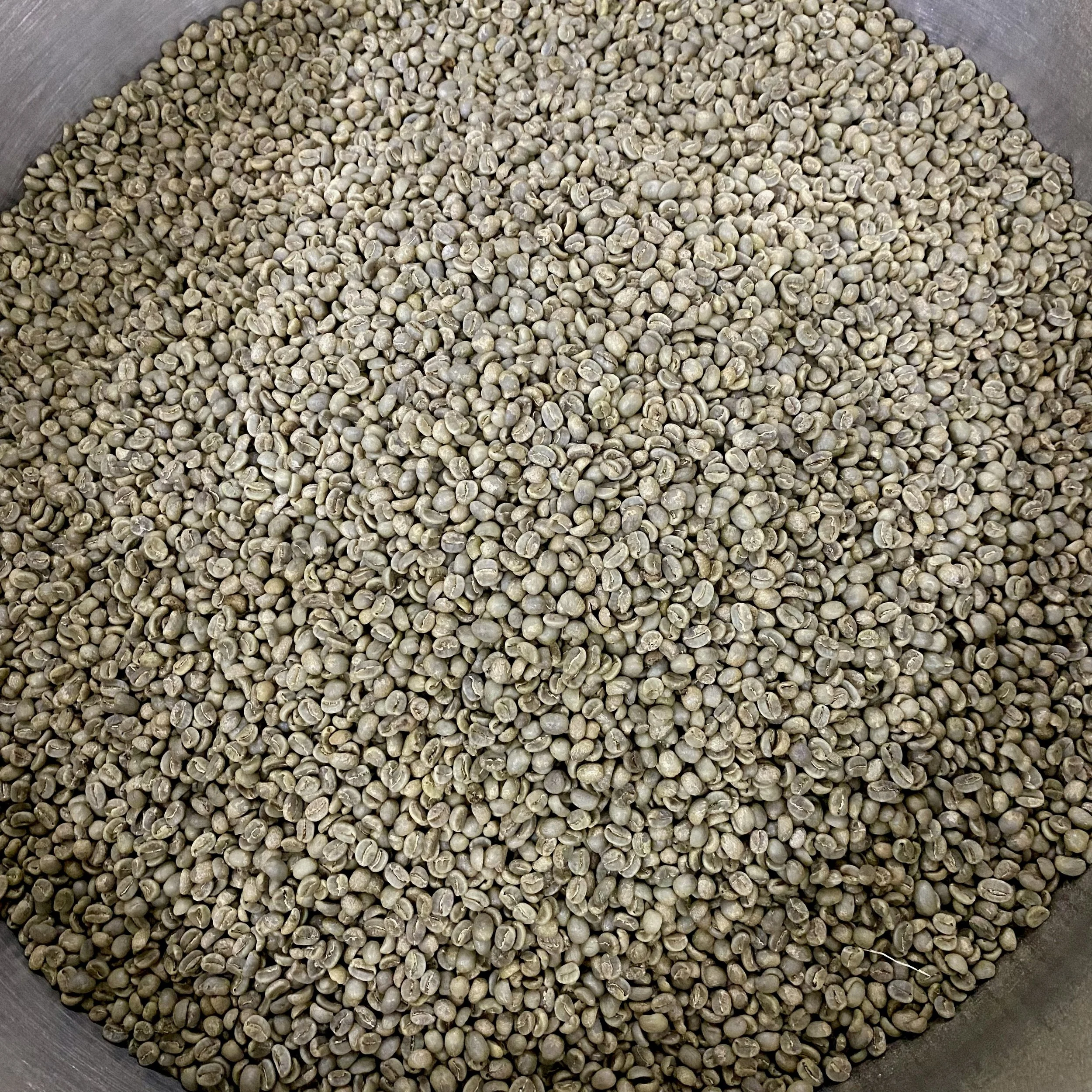
Green coffee is dense and has a raw, grassy aroma. It looks and feels like little pebbles, with a gray/green coloration that is far from it’s finished appearance. The roasting process will drive out moisture and create complex reactions within the chemistry of the bean that transform that raw, green seed into the coffee we know and love.
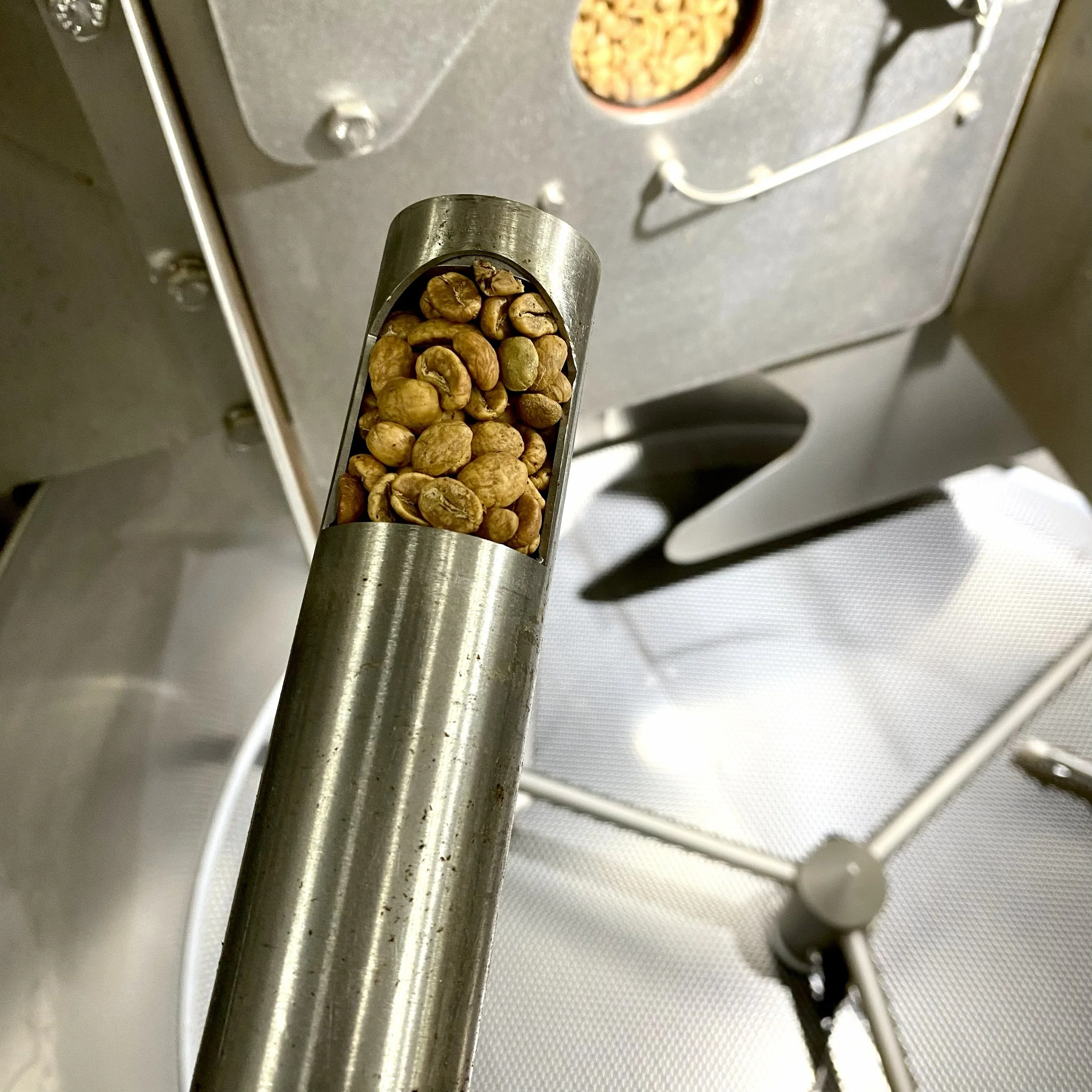
The sampler and window allow us to see what is happening during the roast.
There are three main stages in the roasting process: drying, Maillard and development. During the first phase, drying, green coffee starts to lose moisture and density with the application of heat and air movement. The “green” coffee starts to lighten and turn a pale yellow as it dries
This lightening or yellowing signals the start of the Maillard phase. This is where sugars and amino acids present in the raw coffee begin to transform. Like the browning of baking bread, toasted nuts or roasted meat, this is a combination of caramelization and complex reactions that create new compounds as the coffee continues to roast. These compounds will affect flavor and aroma in the finished coffee.
As the roast progresses, we head into the final stage, development. We hear a subtle crackling or popping, the “first crack” as this stage begins. Caramelization continues here and we generally see a “second crack” a bit more distinct than the first as we head into medium roast territory. This is the continued physical expansion of the coffee bean as the cell walls soften and allow gases to puff the bean up a bit, resulting in a more voluminous but less dense bean when compared to the raw bean we started with.
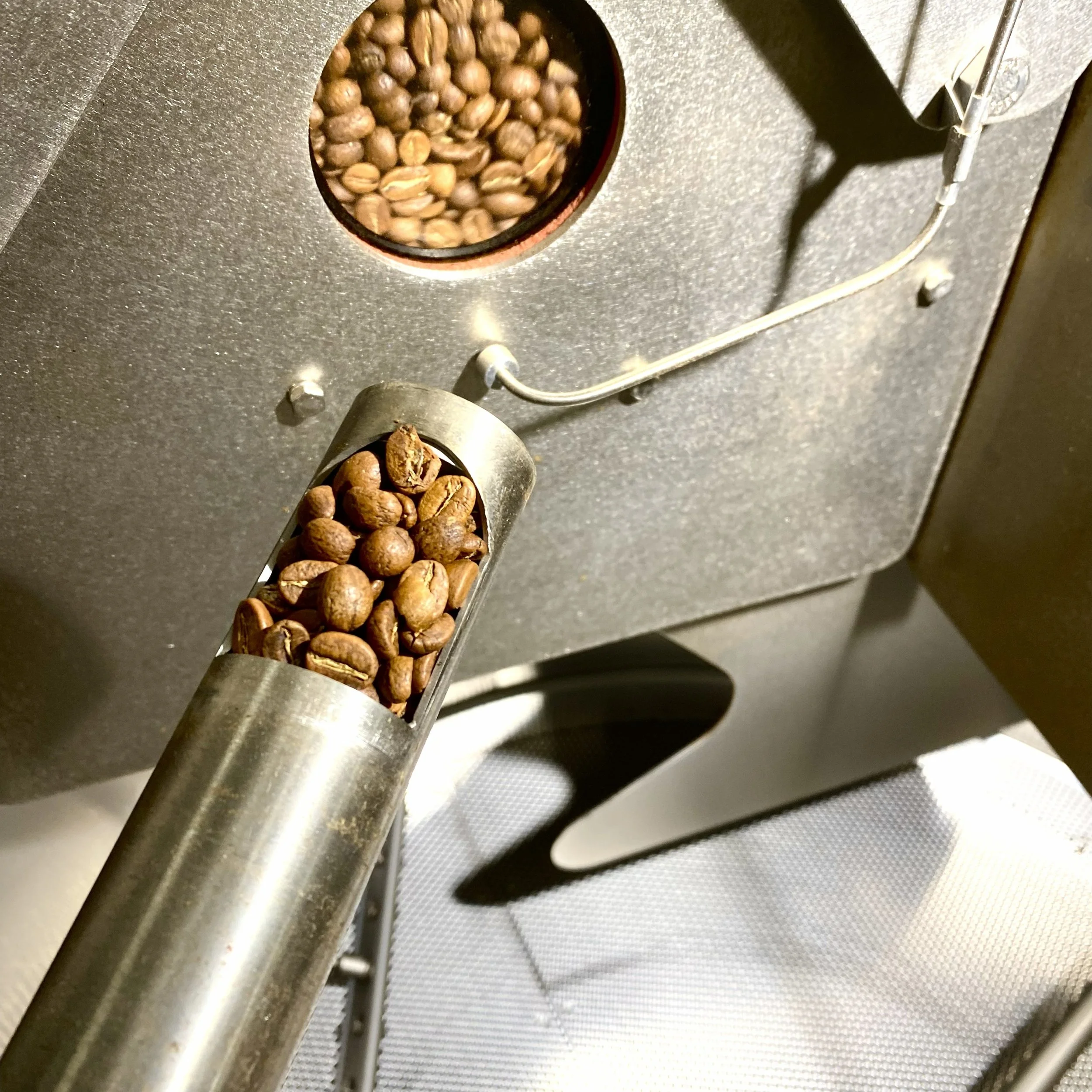
The roast is progressing.
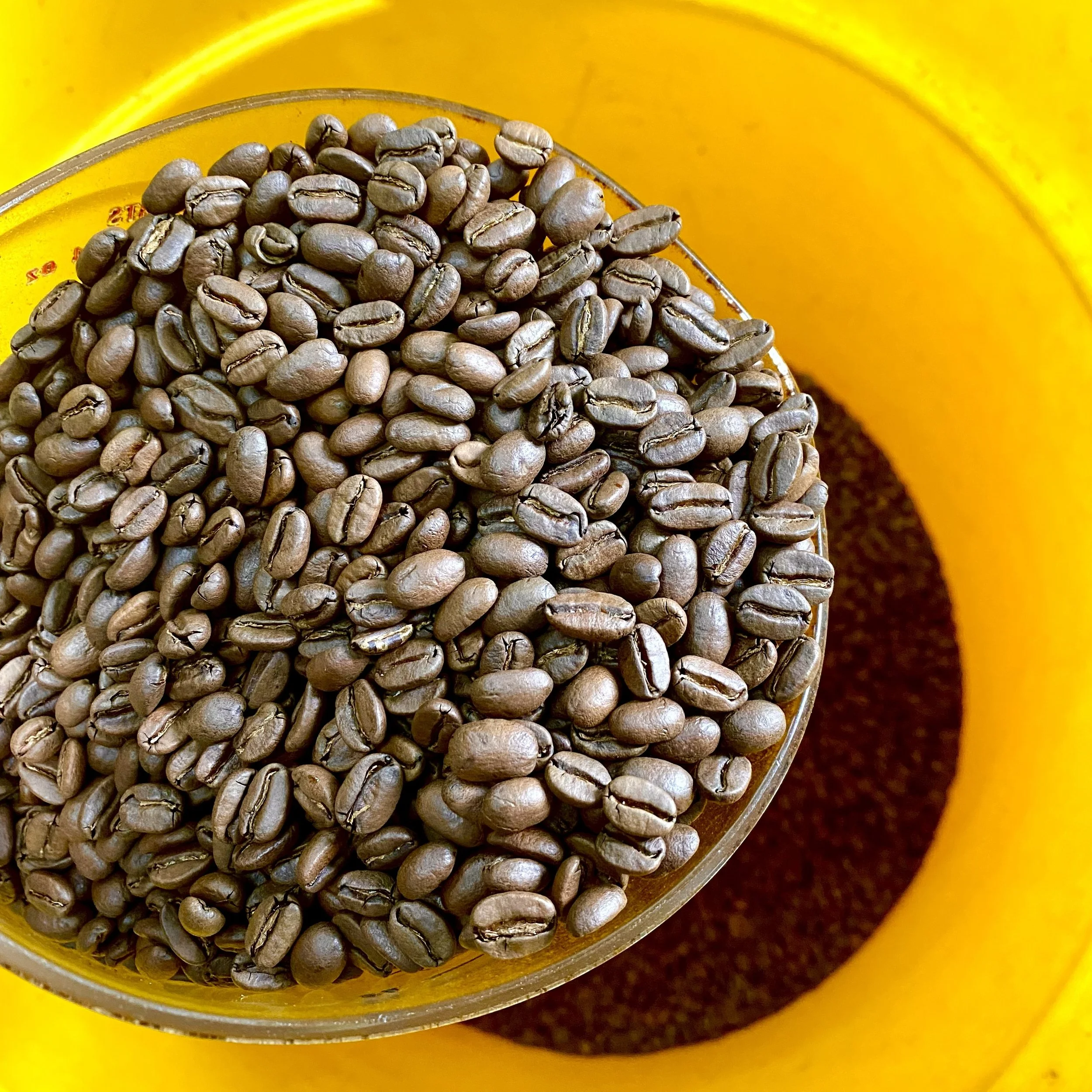
The finished product, medium roast.
Our job is to guide each variety through these phases, paying attention to timing and the blueprint for flavor we have been handed given that particular coffee’s lineage and processing. We take the “rough draft” of a coffee’s flavor potential and work to bring it to it’s fullest flavor potential. It is perhaps the most dramatic part of the coffee’s journey, popping, cracking, smoking, and expanding it’s way one step closer to your cup. Thank you for choosing us and our great lineup of coffee varieties. Happy sipping!
Ian Ballingall, Head Roaster