Understanding Coffee Processing: Washed, Natural and Honey Process Coffees
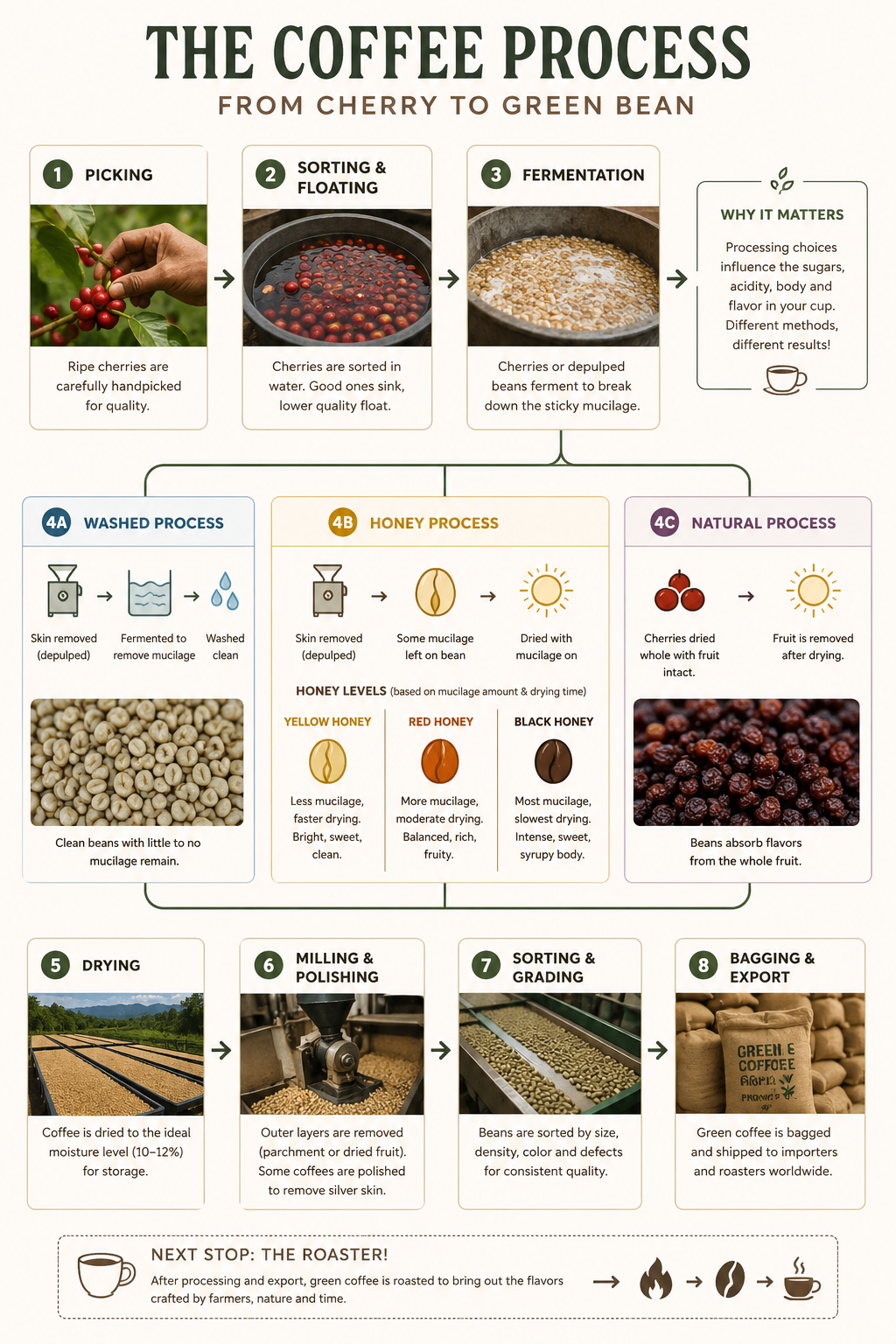
You probably have heard the terms “washed”, “natural” and maybe “honey” pertaining to coffee and/or seen them on labels. They are all ways coffee cherries are processed to remove the fruit and prepare the inner seed (bean) for roasting. The way coffee is processed has a huge impact on flavor---fruity naturals, clean washed coffees, and sweet honey processes all begin the same way: as ripe coffee cherries growing on a tree. We’re going to break down the steps of processing to help you better understand how coffee goes from fruit on a plant into the cup you brew every day.
1. Picking the Coffee Cherries
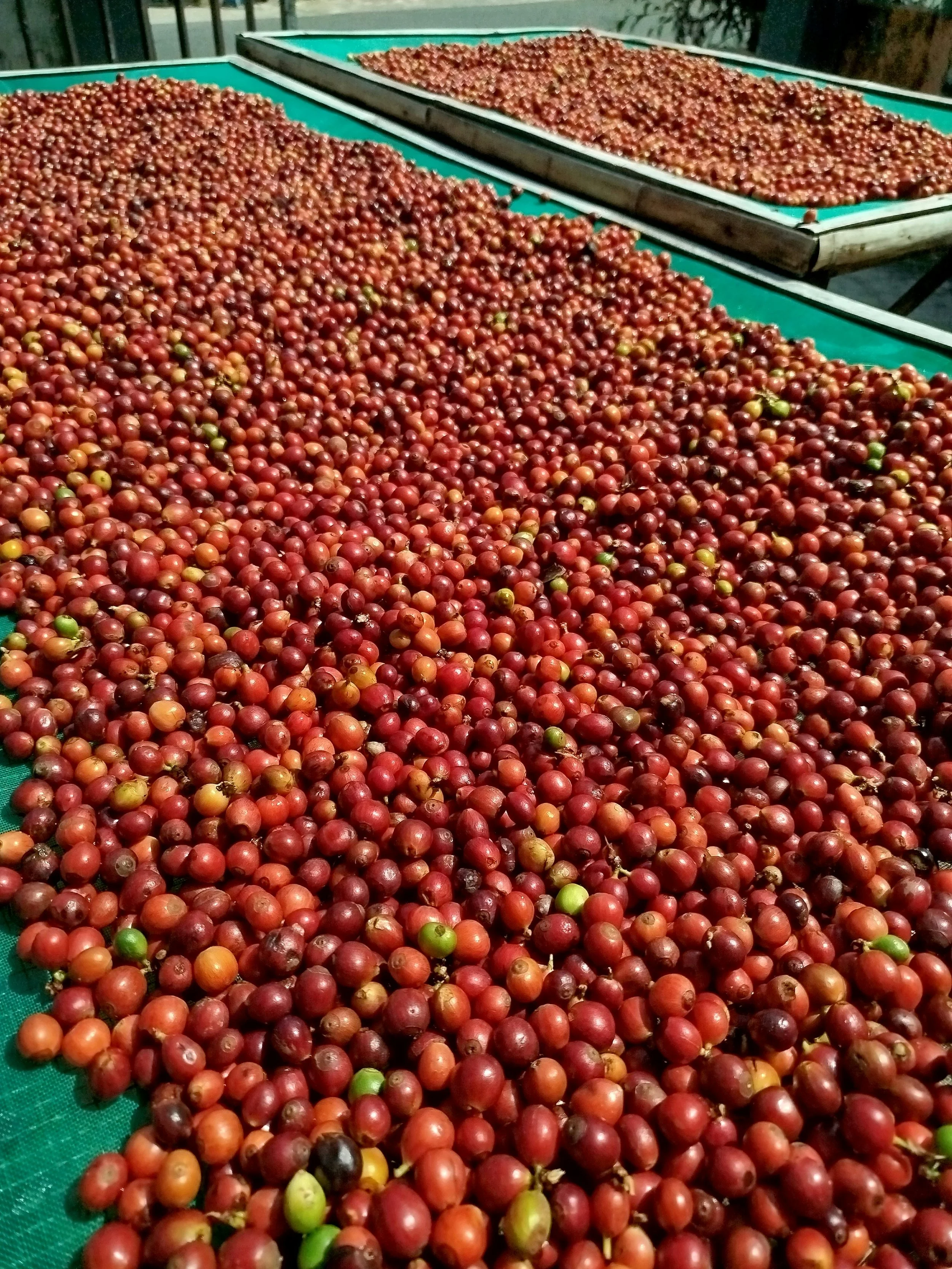
Coffee begins as a fruit called a coffee “cherry”. When ripe, cherries are usually deep red, though some varieties ripen yellow (like Catui) or orange. In many producing regions, cherries are picked by hand so workers can select only the ripest fruit. This is slower but often leads to higher quality coffee.
2. Sorting and Floating
After harvest, many farms sort cherries to remove underripe or damaged fruit. A common method is floating the cherries in water because dense, healthy cherries sink and lower quality or damaged cherries float. This helps improve consistency before processing begins.
3. Fermentation
Before drying, coffee is often fermented to break down sticky fruit material surrounding the seed (the coffee bean). Fermentation can last anywhere from several hours to multiple days depending on climate, desired flavor profile and which processing method that will follow. Some producers carefully control fermentation for unique flavors, while others keep it simple and traditional. We have recently tried some amazing coffees from Finca el Paraíso Colombia that are carefully fermented to bring out incredible flavors.
4. Washed Process
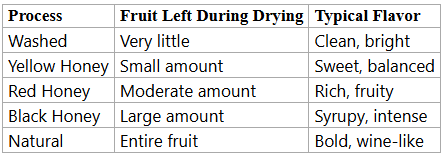
In the washed process fruit skin is removed with a depulper, then beans ferment in tanks to loosen remaining fruit. Beans are then washed with clean water and dried, usually on racks or large flat areas.
Washed coffees are often very clean, bright and floral. Think washed process Colombia or our “Roaster’s Choice” this month, Peru Cajamarca. The Cajamarca is silky smooth with notes of ripe berry, sweet caramel and clean cocoa.
5. Natural Process
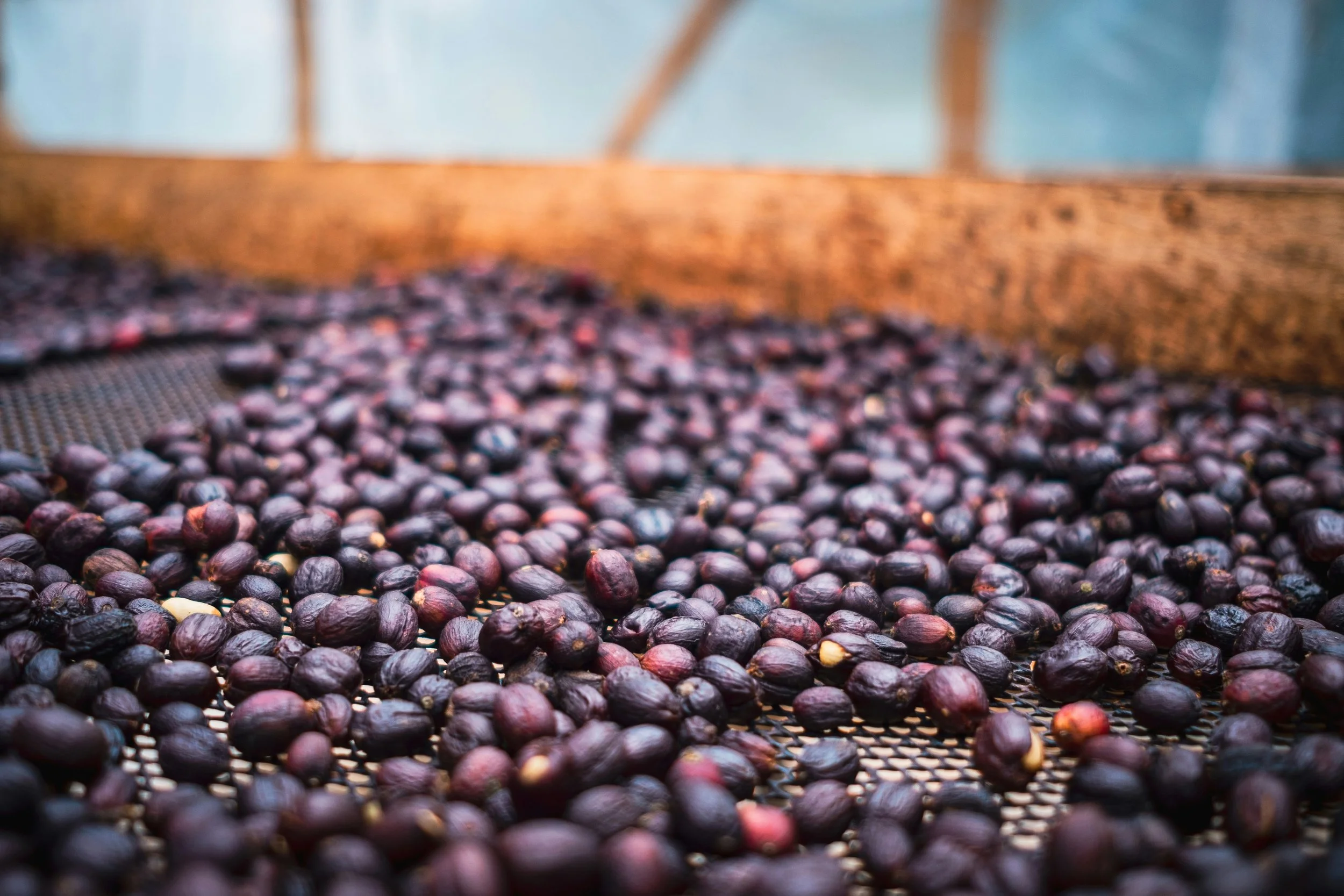
Natural coffees are dried with the fruit still fully attached, the entire cherry dries slowly in the sun before the dried fruit is removed later. This is simpler and uses less water than a washed process, which can save energy for the farm or processing mill. Natural coffees are often very fruity, heavier bodied and maybe even wine-like with more intense flavor. One of my favorites is a natural process Ethiopian landrace variety with heavy notes of dark cherry.
6. Honey Process
Then, somewhere between washed and natural process is the “honey” process coffee. The outer skin is removed, but some sticky fruit material (“mucilage”) remains during drying. Despite the name, no actual honey is involved but they can result in a noticeably sweeter, full bodied cup. There are different levels of “honey” ---yellow, red and black that are differentiated by the levels of mucilage left on the bean.
7. Drying the Coffee
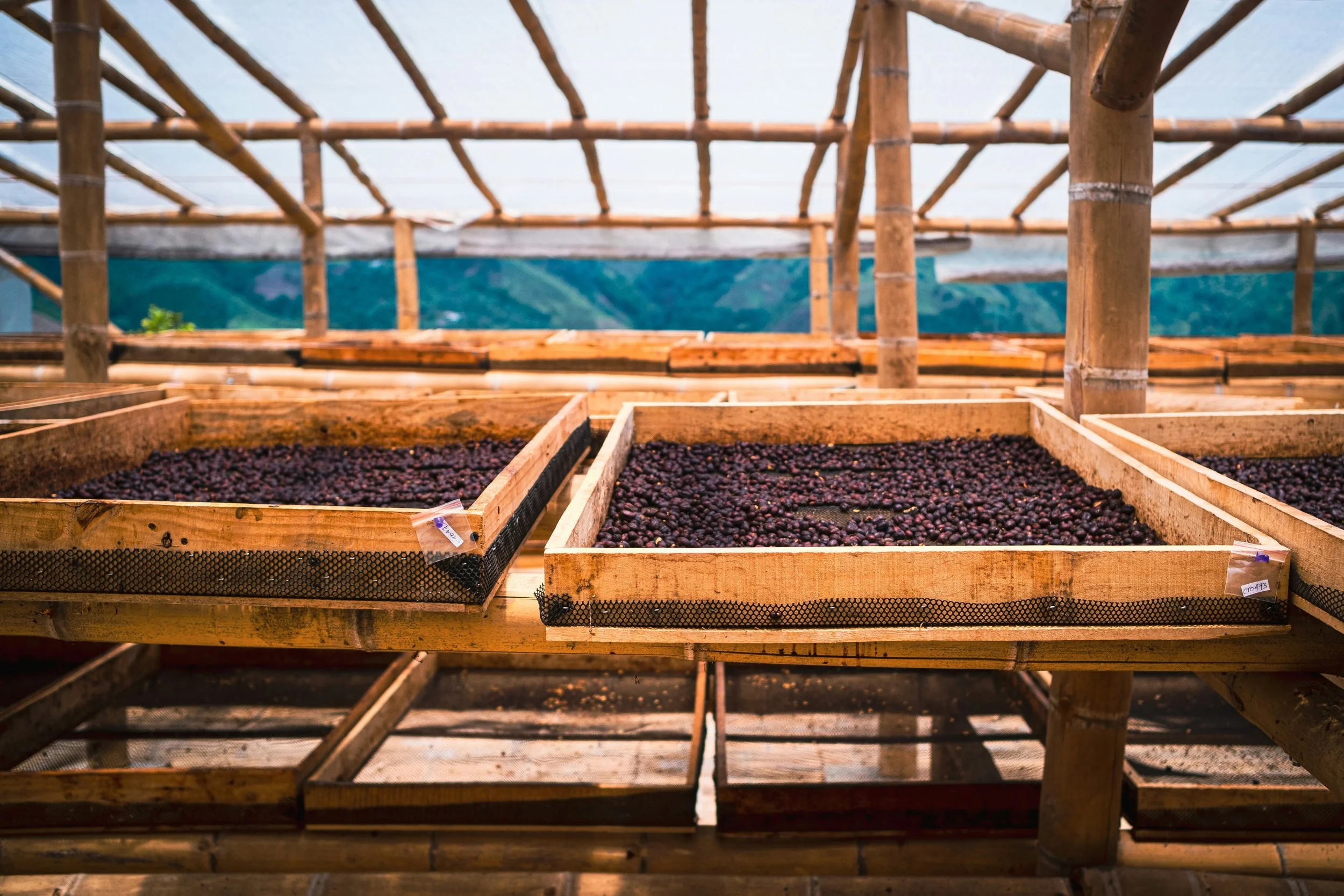
After processing, coffee must be dried carefully to safe moisture levels. Often dried on racks or raised concrete beds, the coffee is turned or raked to ensure even drying. This process can take days to weeks depending on climate and processing method.
8. Milling and Polishing
Once dry, coffee still has protective layers attached. These dry outer layers are removed during milling: the “parchment” of washed coffees or the remaining fruit of natural process coffees.
9. Sorting and Export
Before export, green coffee is sorted by size, density and color. It is also inspected for any defects in the bean, such as insect damage. Higher grades generally contain fewer defects and more uniform beans. The coffee is then bagged and shipped to importers and roasters like us!
You can see a lot of work and careful planning goes into that cup we all enjoy every morning, from the variety of coffee grown (check out our blog post on Coffee Genetics) to how it’s processed and handled post-harvest to maintain quality and prevent spoilage. It makes every sip that much more precious!