
Mind the Grind: Coffee Brewing Methods and Techniques
When it comes to brewing coffee, there are a lot of ways to go about it. Most people seem to find one or two they like and stick to them (e.g. drip in the winter, cold brew in the summer) but you may find some fun and adventure in exploring new ways to brew! There are methods that are better suited to certain tastes or coffees and you may find a coffee you like as a cold brew really shines as espresso or through a pour over. It’s worth experimenting a bit and doesn’t always have to mean a lot of new equipment on the kitchen counter.
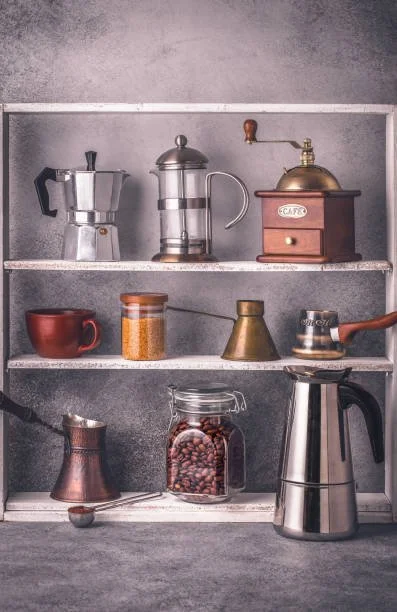
The two things to pay the most attention to are grind size and brew ratio. These are generally adjusted for every brew method and play an important role in time and strength of extraction. If you want to get things really dialed in, a small digital kitchen scale is a great tool, but you can “eyeball” and adjust depending on how you like your results. For a brew ratio of 1:16 (usually a good starting point for most filter brew methods like drip, pour over, French press, etc.) you will want 16 parts water to 1 part coffee by weight. So 15 grams of coffee with 240 grams/milliliters of water (a milliliter of water weighs a gram) might be a good start for a single cup. For espresso, you will want a much stronger ratio, generally 2-3 parts water for 1 part coffee because of the very fast extraction and desired strength.
There is certainly a lot of wiggle room based on personal preference, but if you are really methodical a few times, it makes adjusting and “eyeballing” much easier. I’ll also include a few helpful conversions here for those of you who haven’t gone full metric (yet).
1 cup = 8 oz. = 240 milliliters/grams
1 “scoop” coffee = 10 grams
1 TBSP coffee = 5 grams
Grind size is also very important, and generally a coarser grind will have less surface area and extract more slowly. Often the time that water is interacting with the coffee is a determining factor here. Too fine a grind and your coffee may taste bitter and harsh, too coarse and it may be under-extracted, weak or sour. As we move through the brew methods, I’ll note grind size, brew ratio and a few coffee recommendations for each.
Water temperature is important, and when you can control it, 200 degrees Fahrenheit is ideal (+/- 5 degrees). Too cool and you won’t get the extraction you want and the coffee will be weak/sour, too hot and it will likely be bitter/acidic without much body. If you don’t have a thermometer, you can bring your water to a boil (212 degrees F) and wait a minute or two for it to cool slightly.
Brew Methods
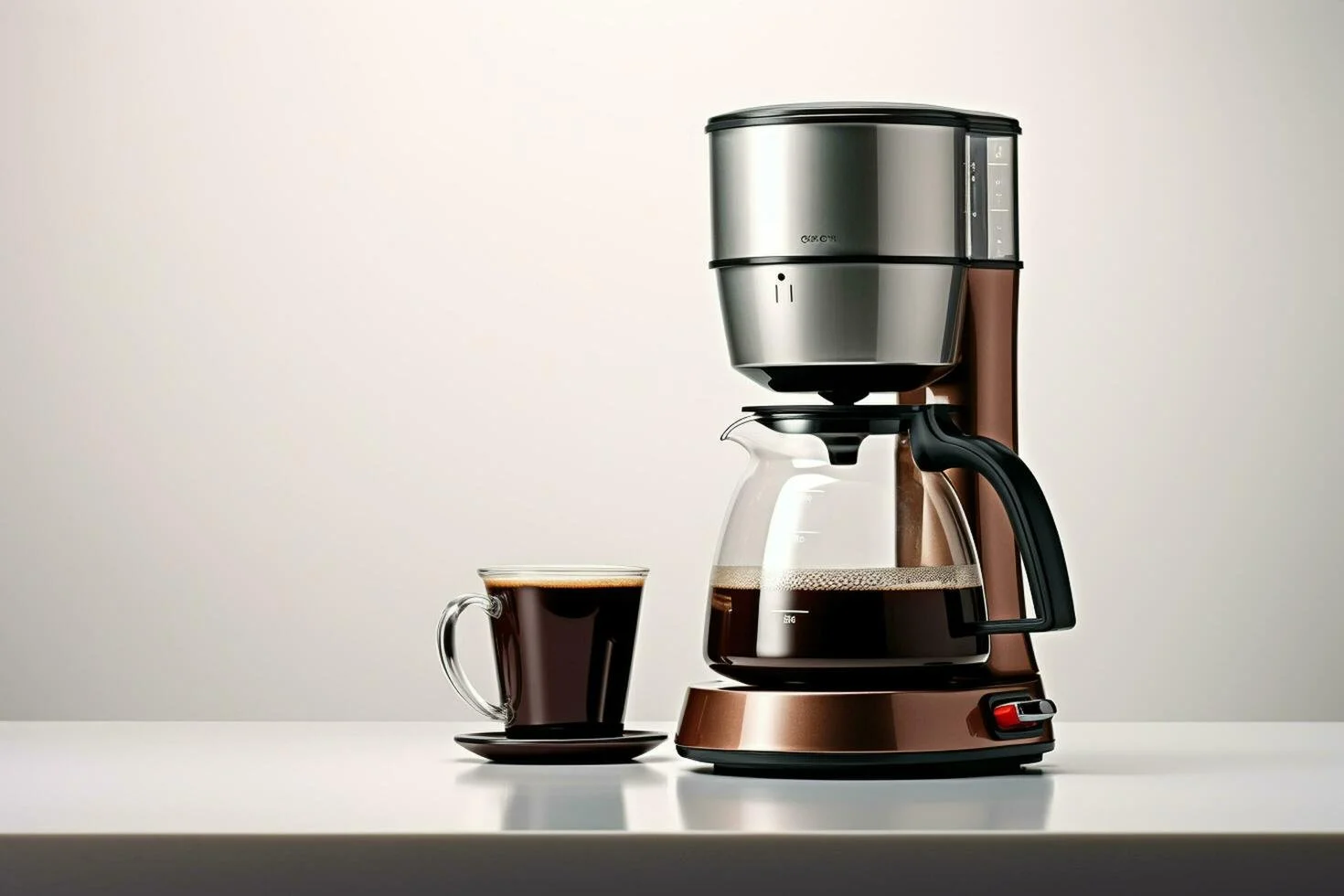
DRIP COFFEE
Ratio – 1:15-1:17
Grind – Medium (table salt)
Swift River favorites – Annie’s Blend (medium), Signature Roast (dark)
The most familiar brewing method is probably drip coffee and how a lot of people get started on their coffee journey. It’s simple and approachable, the equipment is inexpensive and easy to find, and you can buy coffee right off the shelf without buying a grinder. It delivers a balanced, clean coffee flavor that shows origin characteristics and you can easily scale up or down depending on household size (or mug size!). I recommend unbleached filters and keeping your carafe and filter basket clean. Most are automated, some will grind for you, some will keep it warm, all of them will brew coffee. If you are making adjustments, I suggest changing the amount of coffee as opposed to the grind size. This will give you more or less strength without changing the quality of extraction.
ICED COFFEE
Ratio – 1:15-1:16 (split water between ice and water)
Grind – Medium (table salt)
Swift River favorites - Ethiopian, Costa Rica
The classic cold coffee method, before “cold brew” was on the scene. You can use drip brewer, pour-over, or Chemex. Easy enough to execute, just substitute half of your brewing water for ice and add the ice directly to your coffee pot or whatever you are brewing into. Then brew as you normally would, maybe adjusting your pours a bit for the reduced amount of water when brewing with a pour-over or Chemex.
This method will preserve more acidity, brightness and fruity/floral/citrus than cold brew and is a notch up from simply adding ice to brewed coffee, as you are not diluting the strength and compromising your brew ratio.
COLD BREW
Ratio – 1:16-1:19
Grind – Coarse (sea salt)
Swift River favorites - Icebox Cold Brew, Honduran, Icebox Cold Brew PODS
“Cold brew” coffee is fairly new to the scene, but very popular and an easy way to enjoy cold coffee. The cold brew process produces a mellow, low acid, super smooth cup, highlighting chocolate notes and sweetness while downplaying acidity and more subtle notes. The differences in the brew process are brew time and water temperature. This extended brew time generally increases caffeine content by 20-30%, as caffeine is water soluble and it has more time to be extracted.
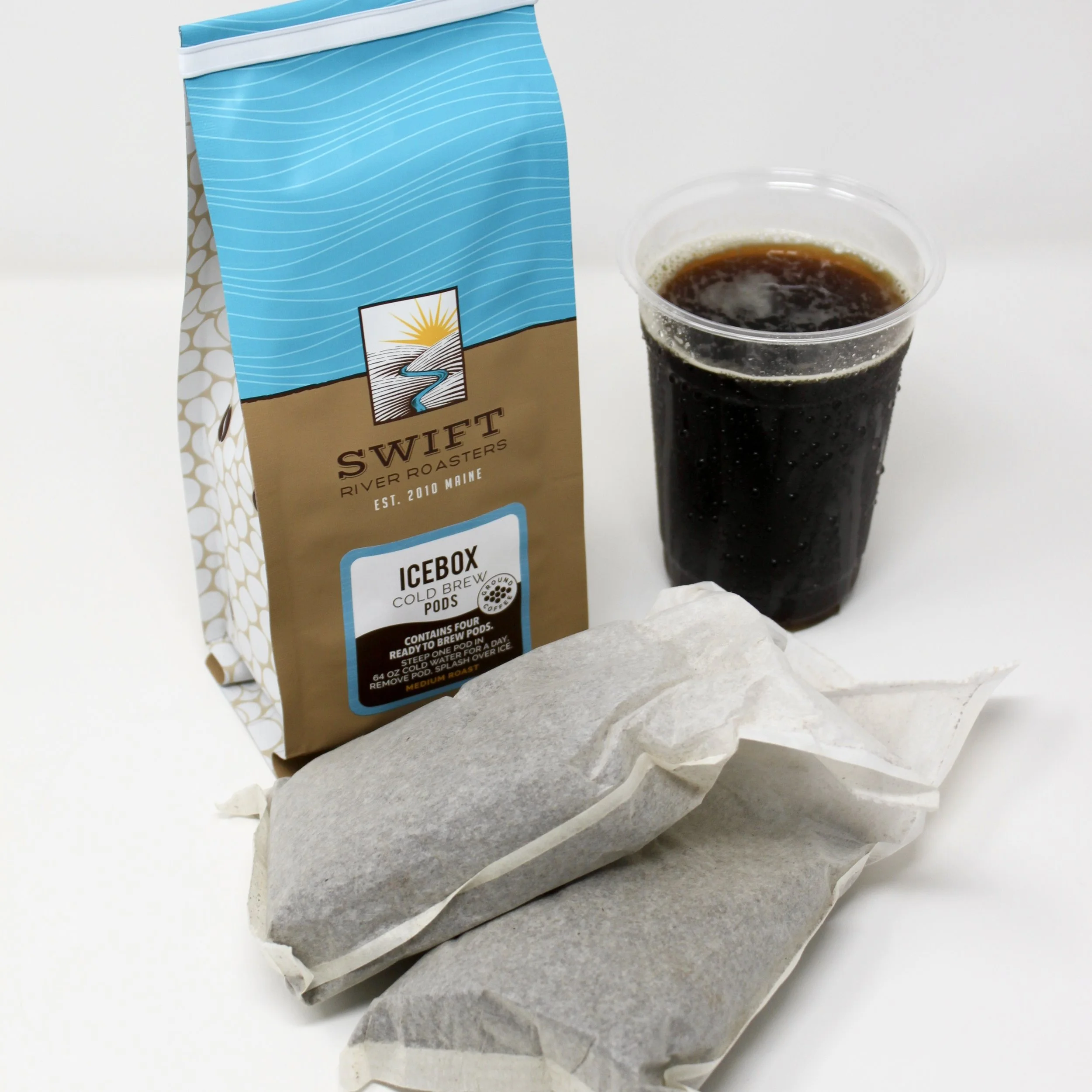
You will want to use a coarser grind for cold brew, and there are many different set-ups. Our favorite is our Icebox Cold Brew PODS, 3 oz. of ground coffee sealed in a filter “pod”, ready to brew. Just immerse in 2 quarts of water and brew at room temperature for 18-24 hours or in the fridge for 36 hours. This is a blend formulated for cold brew, giving a rich, smooth full bodied brew with heavy chocolate notes and a nice sweetness. Using anything else basically boils down to adding ground coffee to water, letting it sit, then filtering out the grounds to serve. Some people like to make ice cubes with the brewed coffee to avoid dilution when your ice melts.
ESPRESSO
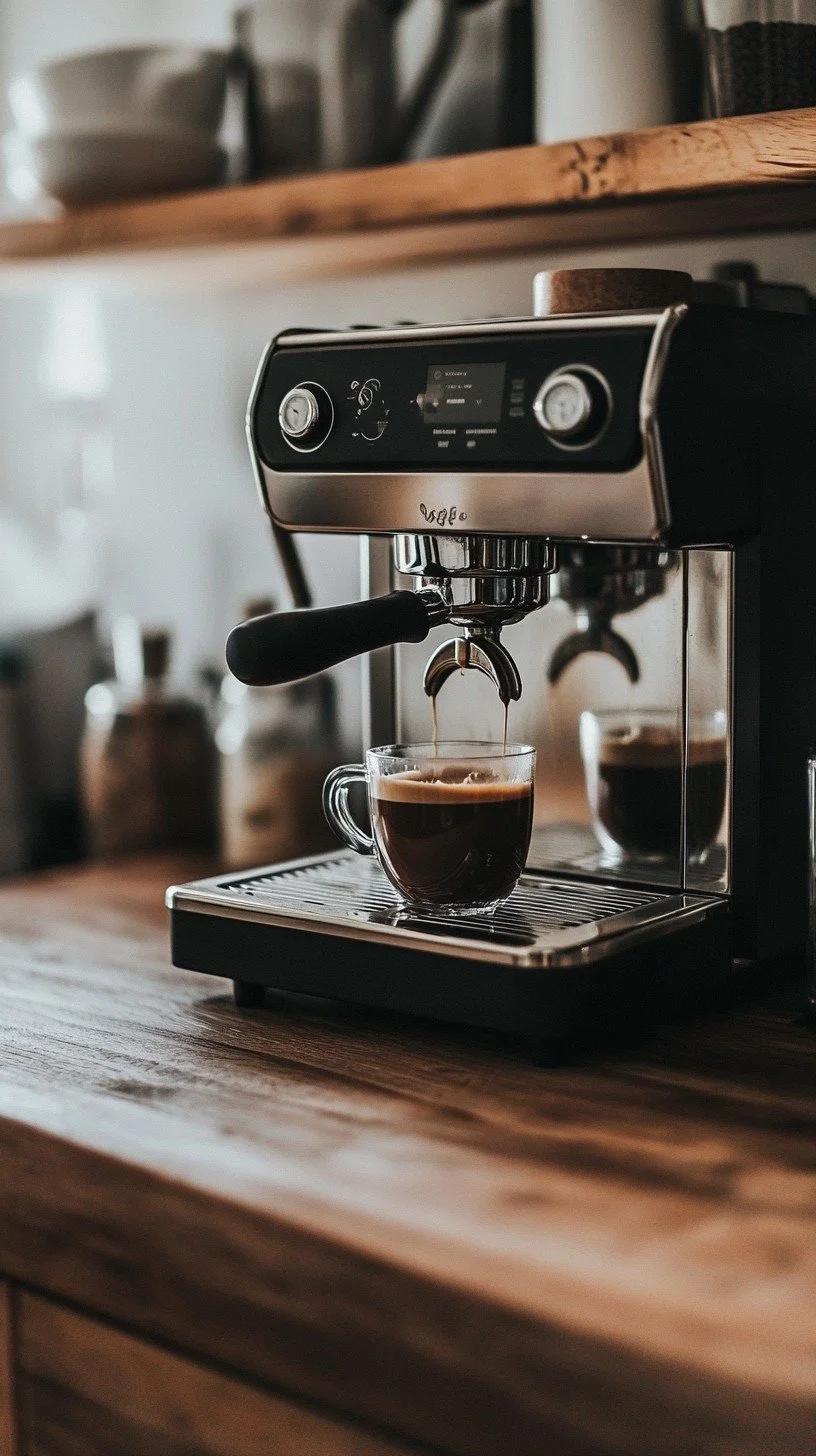
Ratio – 1:2-1:3
Grind – Fine (fine salt, almost powdery)
Swift River favorites - River Rocks Espresso, (dark) Peru, (medium) Italian Roast (medium dark)
So far we have talked about fairly low-tech, approachable brew methods. Espresso requires a bit more investment in equipment, but is certainly worth including here. It is classic café faire and the base for lattes, cappuccinos, cortados, americanos, flat whites, etc. Even if you don’t own a machine, you might take note of what’s being served as espresso at your favorite café or make an informed choice when you have some options for your espresso.
HONORABLE MENTIONS
There are still other methods of brewing that are worth mentioning, but I don’t have a lot of personal experience with. (Other than French press-they are great if not a bit irritating to clean afterward!) If you are thinking about getting into a new brew method, there’s a LOT of info, tutorials, opinions available online. Check into it, look for an honest pros/cons list, and think about how your favorite coffees might perform. In the end, it’s all about personal taste, and if you are enjoying coffee you brewed, you are doing something right. That being said, it IS always fun to try something new!
A. French Press
Ratio: 1:15
Grind: Coarse
Full bodied, rich, you might get some sediment. (You will)
Swift River favorite - River Rocks Espresso, Sumatra
B. Moka Pot
Ratio: Fill basket level
Grind: Fine-medium (between drip & espresso)
Intense, espresso-like
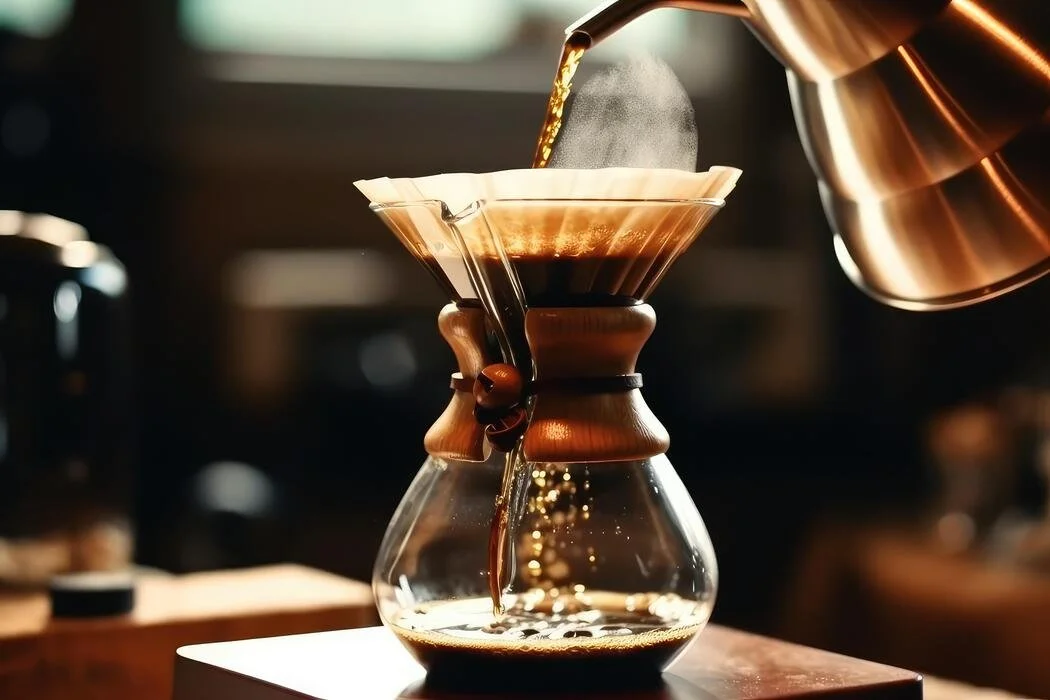
C. Pour Over
Ratio: 1:15–1:17
Grind: Medium-fine
High clarity, expressive acidity
Happy brewing!
-Ian Ballingall, Head Roaster